Walk into any homebrew shop and you'll see a wall of grain bins with names like 2-row, Maris Otter, Crystal 60, Chocolate and Carafa. It's a lot to take in the first time. The good news is that every one of those grains falls into one of two camps: base malts and specialty malts. Once you know which is which and what each one brings to the party, building a grain bill gets a whole lot easier. Here's the rundown. Cheers!
What's the Difference?
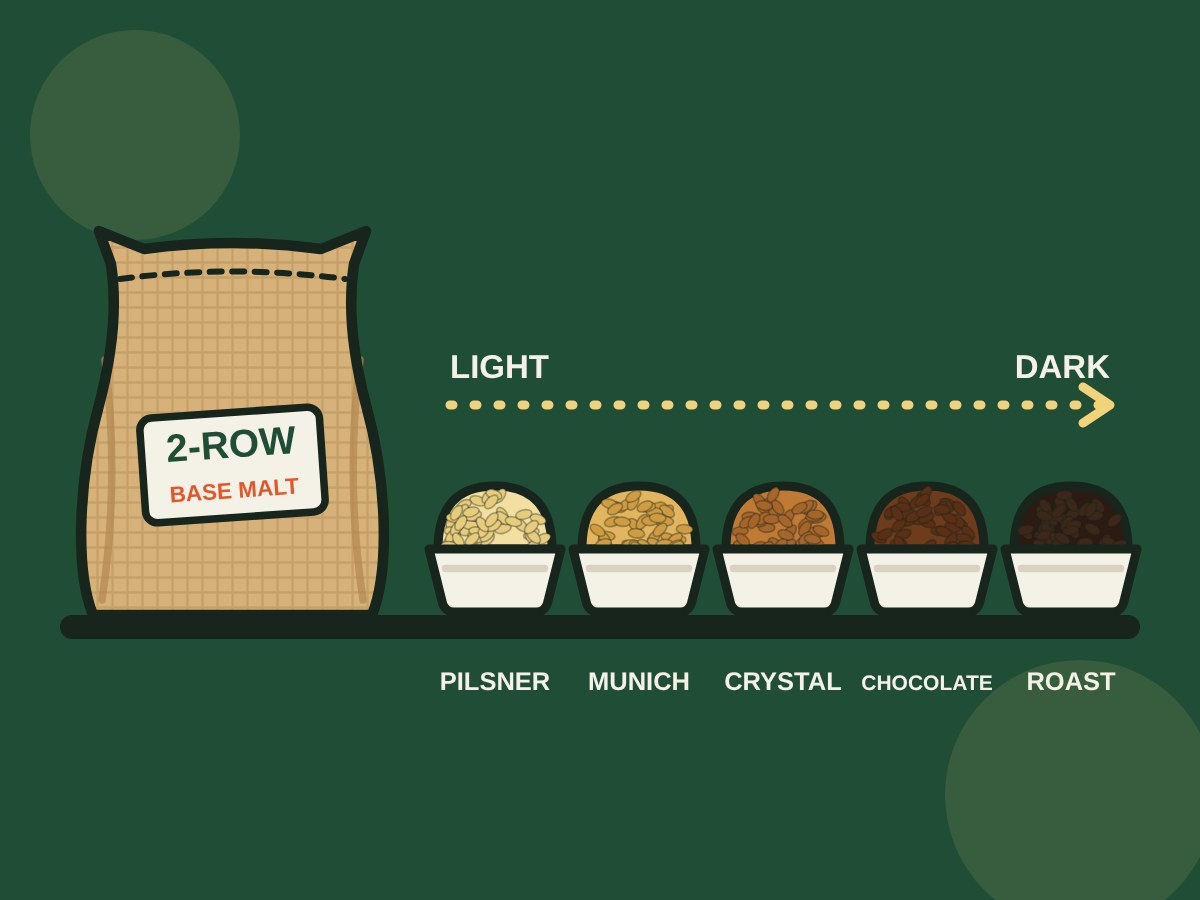
Base malts are the foundation of the beer. They're lightly kilned, so they still carry plenty of the enzymes that turn starch into sugar during the mash. That means they can convert themselves (and then some), and they supply most of the fermentable sugar in your beer. They usually make up 60-100% of the grain bill.
Specialty malts are the seasoning. They've been kilned hotter, stewed or roasted, which builds color and flavor but kills off most or all of the enzymes. They bring the caramel, toast, chocolate and coffee notes, along with body and color. They're usually used at 1-20% of the grain bill, and some of them only at a few percent.
Think of it like making bread. Base malt is the flour. Specialty malts are the herbs, the seeds and the crust.
Base Malts
Color in grain is measured in degrees Lovibond (°L). The lower the number, the lighter the malt.
- American 2-row (about 2°L) - clean, neutral and cheap. The workhorse for American pale ales, IPAs and just about anything else. If you're not sure, start here.
- Pilsner (about 1.5-2°L) - light, sweet and a little crackery. Perfect for lagers, Belgians and hazy beers. Give it a longer boil (90 minutes) to drive off DMS, which tastes like creamed corn.
- Maris Otter (about 3°L) - the classic English base malt, with a rich, bready, biscuity flavor. Makes a great SMaSH beer on its own and is our go-to for English bitters and stouts.
- Vienna (about 4°L) and Munich (about 6-10°L) - kilned a little darker for a toasty, malty backbone. They have enough enzymes to stand on their own, so they can be the whole grain bill in an Oktoberfest or bock, or a 10-20% splash in a pale ale.
- Wheat malt (about 2°L) - adds body and helps with head retention. Up to 50-70% in a hefeweizen, or 5-10% in almost anything else for a better head.
Specialty Malts
Here's where the fun starts. These roughly go from lightest to darkest.
- Biscuit, Victory and Aromatic (about 20-30°L) - toasty, bready and nutty. 5-10% gives an amber or brown ale that "fresh bread" thing.
- Crystal or Caramel malts (10-120°L) - these are stewed before kilning, which turns the starch into sugars that partly caramelize. The light ones (10-20°L) add a touch of sweetness and body, the middle ones (40-60°L) add caramel and toffee, and the dark ones (80-120°L) bring raisin and dark fruit. Keep crystal to about 5-10% or the beer gets sweet and syrupy. Ask me how I know.
- Chocolate malt (about 350°L) - roasted for chocolate and coffee flavors without being too harsh. 3-8% in porters and brown ales.
- Roasted Barley (about 300°L) - unmalted barley roasted until it's dark. This is the dry, espresso-like roast in an Irish stout. 5-10%.
- Black Patent (about 500°L) - mostly for color, and it can taste acrid if you overdo it. Use it at 1-3%.
- Dehusked or debittered black malts like Carafa Special (about 300-450°L) - dark color with very little roast bite. Great for black IPAs and schwarzbiers. Our Black IPA leans on it.
Steep or Mash?
If you brew with extract, you can't use just any specialty grain. Crystal malts and the roasted malts (chocolate, roasted barley, black) have already done their starch-to-sugar conversion in the malthouse, so you can steep them like a tea bag. That's exactly what we do in Brew Extract.
Biscuit, Victory, Munich and the other kilned malts still have starch in them that needs a mash to turn into sugar. If you steep them, you'll get starch in your beer and a hazy, flat flavor. If a recipe calls for them, do a small "mini mash" with an equal weight of base malt, or make the jump to Brew in a Bag.
Putting it Together
Most good beers use one base malt, plus one to three specialty malts. Here are a couple of simple grain bills to show how the pieces fit:
American Pale Ale
90% American 2-row
5% Munich
5% Crystal 40
Robust Porter
80% Maris Otter
8% Crystal 60
7% Chocolate malt
5% Black Patent (or Carafa Special for a smoother finish)
For more on turning a grain bill into a full recipe with hops and yeast, check out Create a Recipe. The Specialty Grains chart is also a handy cheat sheet for how much of each grain to use.
A Few Tips
- Taste the grain. Chew a few kernels of each malt before you brew with it. It's the fastest way to learn what each one tastes like. We take this even further in Try Ingredients Before Brewday.
- Buy base malt in bulk. A 50 lb sack of 2-row is much cheaper per pound, and it keeps for a year or more in a sealed bucket. Buy specialty malts by the pound as you need them.
- Keep it fresh. Crushed grain goes stale in a few weeks, so crush on brew day if you can. Vacuum-seal the leftovers like we do in Store Hops and Specialty Grains.
- Get a good crush. See Weigh and Mill Grain for how we do it.
Grab a handful of each and start experimenting. Cheers!
Leave a comment